
Looking for a fast-growing career field that can help you take your future in exciting new directions? If so, it’s time to invest in phlebotomy training.
After all, the phlebotomy field is expected to grow 22% in the next ten years, far faster than average across all industries.
Not sure where to begin with phlebotomy training? Here’s a quick and easy guide to help you figure out if phlebotomy training is the right fit for you—and how to get started.
What is Phlebotomy?
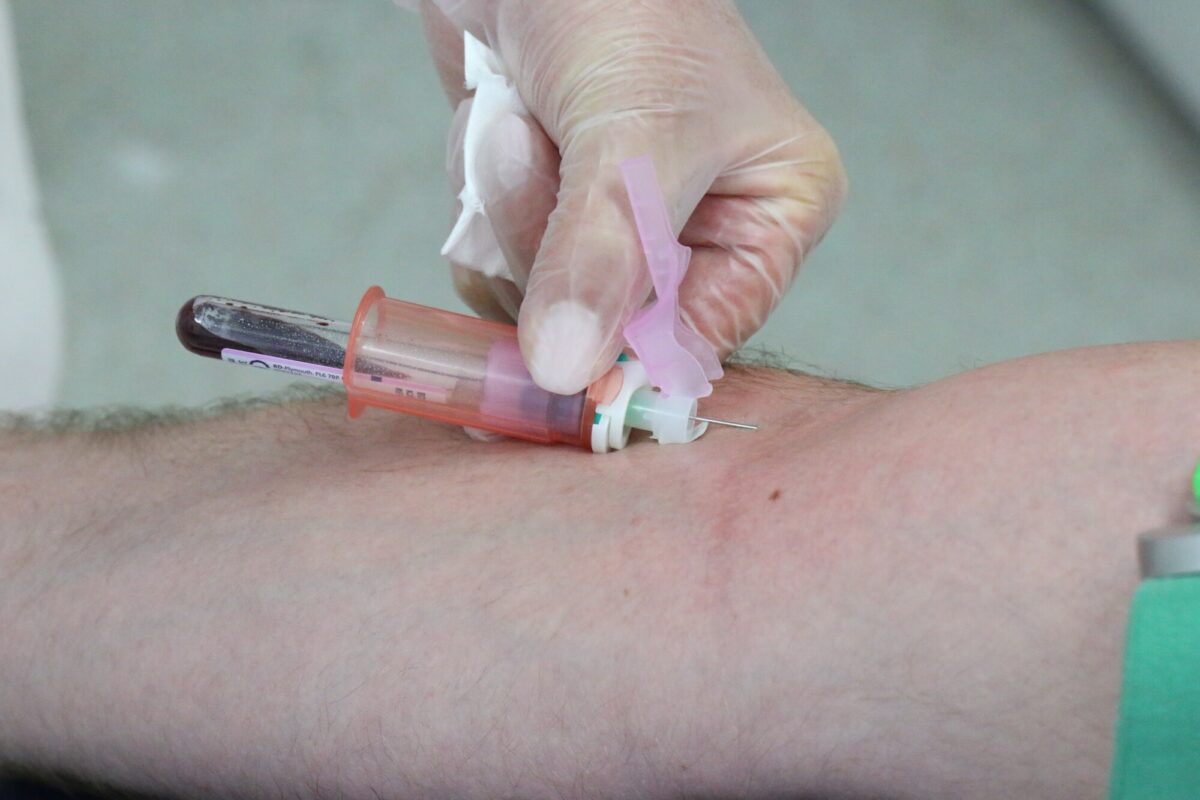
Ever wondered who takes blood samples at a doctor’s office? That’s the practice of phlebotomy—when someone uses a needle to take blood from your vein, usually via your arm. It’s a crucial tool for diagnosing a variety of medical conditions, though a therapeutic phlebotomist may also draw blood as part of a treatment.
Of course, there’s more to the job than simply drawing blood from a vein. For example, a phlebotomist may also draw blood from a capillary (usually a finger, ear lobe, or heel) when only a small amount of blood is needed. They also need the finesse to handle tricky blood draws, such as blood draws for patients with narrow, hard-to-hit veins.
Is a Phlebotomy Training Program Right for You?
So, is a phlebotomy training program the right choice for you and your career?
The good news is that it’s a fast-growing career that’s relatively easy to get into. All you need to get started is a high school diploma, after which you can enroll in a phlebotomy training program and finish within a year. After that, you can work in any medical office requiring regular blood draws—which means the majority of medical offices. You’ll also be able to work in blood banks, laboratories, and hospitals.
Starting Medical Training as a Phlebotomist Technician
Phlebotomy certification requirements vary based on what state you live in. That said, only four states (California, Louisiana, Nevada, and Washington) require state-specific phlebotomy licensing. In California, for example, there are three levels of phlebotomy certification:
- Limited Phlebotomy Certification (LPT)
- Certified Phlebotomy Certification (CPT I)
- Certified Phlebotomy Certification (CPT II)
All the rest will accept a nationally accredited phlebotomist certification program. So unless you work in one of those four states, you’re usually best served by a nationally accredited phlebotomist training program.
These programs all teach the same thing: how to draw blood safely and how to interact with patients to ensure a safe, positive blood draw experience. Your certification exam should cover technique, but the training process should also include a clinical component allowing you to work with real-life patients.
The Accredited School Program Phlebotomists Trust
That’s where we come in.
The National Association of Phlebotomy Technician Professionals is a national leader in phlebotomy training and certification, setting the gold standard for best practices and ethics. We provide future phlebotomists with the tools they need to master their trade and build an exciting future career.
Ready to get started? Check out the details of our exam and learn how you can get certified today.